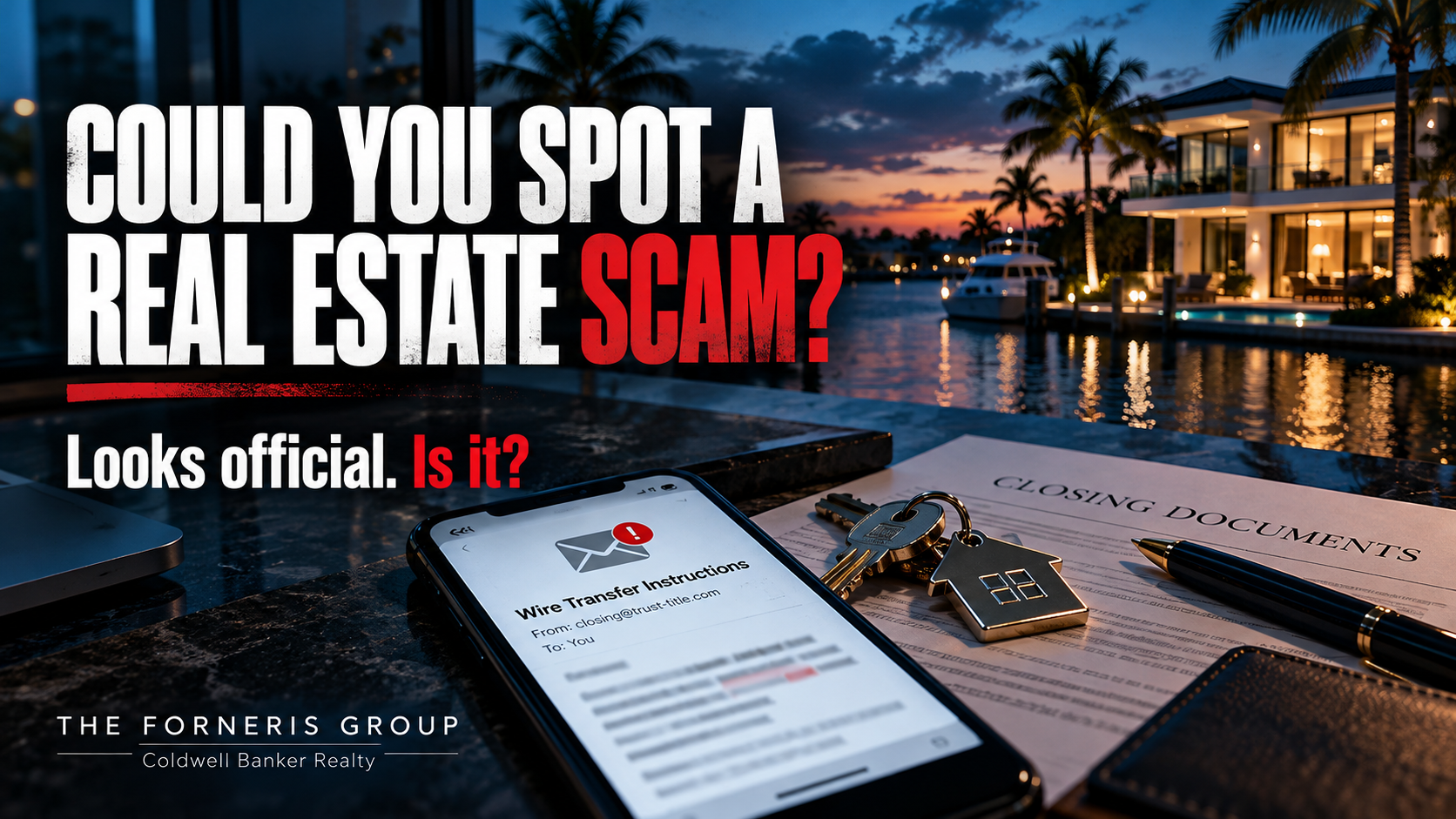
Could You Spot a Real Estate Scam? The Question Matthew Cox Makes Us Ask
You're getting ready to close on your Florida home. An email arrives with wiring instructions. It looks professional, includes details about your purchase, and says you need to act quickly.
Would you stop and verify it—or assume it's legitimate?
That's the kind of question we want to talk about at The Forneris Group.
When true crime meets real estate
If you watch Matthew Cox's interviews, you know his stories can leave you wondering how someone convinced people to trust him.
Cox is a former mortgage broker who pleaded guilty in 2007 to crimes involving mortgage fraud and identity theft. Today, his website presents him as a writer, speaker, and podcast personality. His history offers a starting point for discussing how deception can enter a real estate transaction.
The question for buyers and sellers is personal: Would I recognize the warning signs?
An email can look right—and still deserve a phone call
A familiar name, a professional signature, or accurate transaction details shouldn't replace verification.
The Consumer Financial Protection Bureau advises buyers to confirm closing instructions with trusted representatives in person or through a previously agreed phone number before wiring money. That includes verifying the account name and number.
A simple habit to remember: Pause. Call. Confirm.
Use the contact information you established earlier with your closing team. A sudden change in instructions is a reason to stop and check.
What would you ask Matthew Cox?
We're curious whether our audience would enjoy a real estate scam Q&A exploring questions like:
- What makes someone trust a convincing stranger?
- Which warning signs are easiest to overlook?
- How can buyers and sellers respond when something feels wrong?
- What would you want your parents or adult children to know before buying a home?
If we could ask Matthew Cox one question, what should it be?
This is an audience interest poll; an interview hasn't been arranged.
Tell us in the comments. And if you're planning a move in Southwest Florida, let's talk about your questions, your goals, and the people involved in your transaction.
The Forneris Group | Coldwell Banker Realty
Explore your next move at FornerisFloridaLiving.com.